
Near Misses: What the Research Shows Without the Invented Data
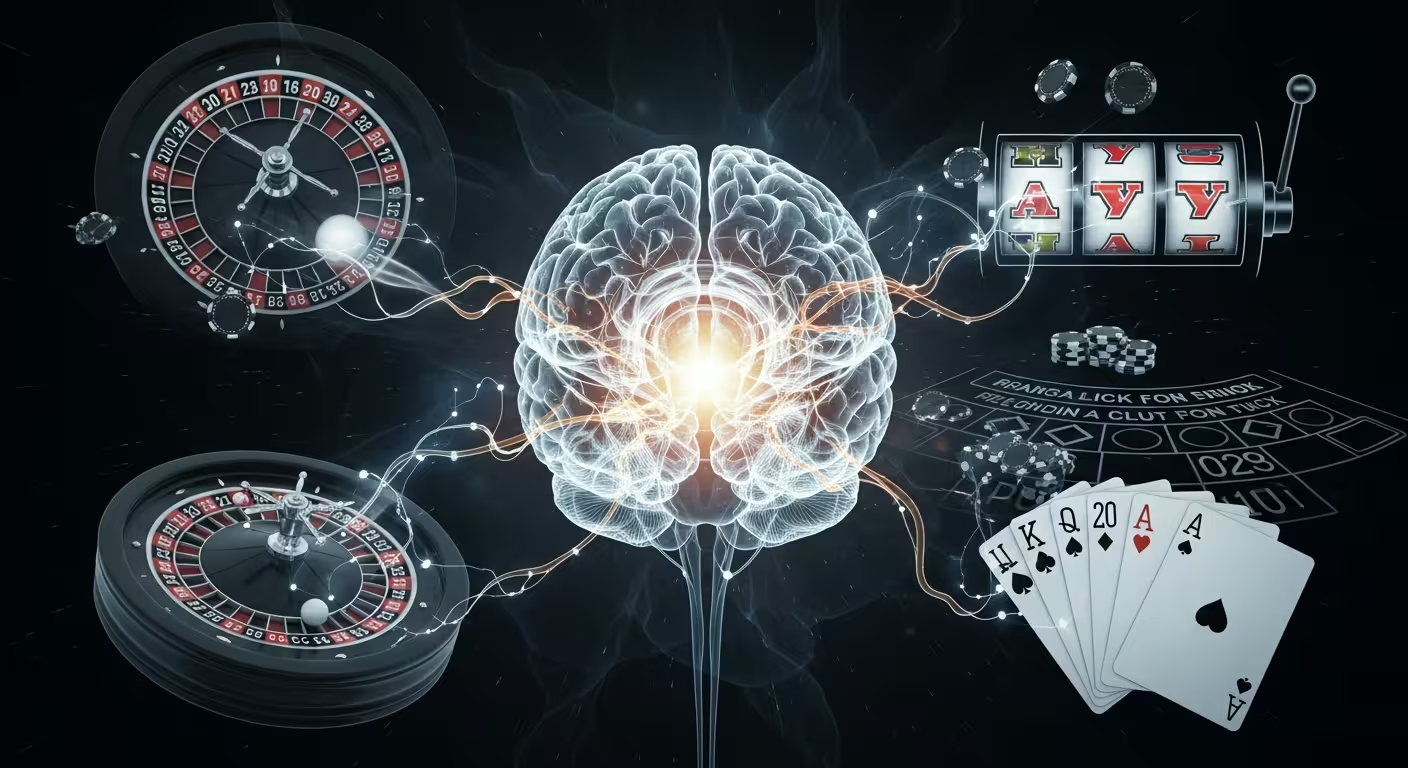
This page reported a personal experiment: thirty consecutive days of logging every near miss, an average emotional score of 8.4 against 5.1 for an outright loss, and a table giving the “dopamine response” and the probability of spinning again within ten seconds for each type of outcome. Those numbers were written, not measured. The effect they were dressing up, though, is real and well studied — so here it is without the invented data.
What the research actually found
The standard reference is the work of Luke Clark and colleagues, whose 2009 study in Neuron scanned players during slot-style outcomes and found that near misses recruited reward-related brain regions in a way similar to wins, while also increasing the stated desire to keep playing — even though a near miss pays nothing. Later research in the same area, summarised by bodies such as the American Psychological Association, has continued to treat the near miss as a motivational event rather than an informational one. The direction is solid; the precise percentages in the old table were not.
How a slot produces them
Reels you see on screen are a display of an underlying weighted mapping: a symbol can be shown far more often than the frequency at which it actually pays, so “two out of three” appears more often than the payout table alone would suggest. How strongly a given game does this is part of the maths certified for that game, and it is not visible from the outside — which is why a claim that one specific title “engineers” near misses is usually unverifiable. That gap between what a player can see and what the game does is also where conspiracy theories grow, as in casino simulation conspiracies.
What to do with the feeling
Treat it as information about the design, not about the next spin. Two symbols and a long third reel say nothing about what follows; the probability is the same as before. A pause helps because it acts before the urge does — the same logic as a deposit limit or a session limit, and the same reason the chase in the “$13,000 in one night” story is the expensive part, not the losses themselves. The underlying reward chemistry is in gambling and hormones, and the jackpot arithmetic the feeling keeps people chasing is in the jackpot piece.
Frequently asked questions
Why does a near miss feel worse than a total loss?
Because it engages reward-related circuitry as if something had been achieved, while the balance says otherwise. That mismatch produces the urge to “finish” the sequence.
Do online slots deliberately create near misses?
Weighted reel mapping makes near misses more visible than payout frequencies imply. Whether a particular game goes further than that is part of its certified maths and cannot be established from outside.
How can I reduce the emotional impact?
Set a session limit and a deposit limit in advance, and take a real break after a run of near misses. Acting before the feeling is the whole point.
Is the effect stronger on mobile?
Plausibly, given the speed and the closeness of the screen, but we have not seen a study that establishes it, so we are not going to claim it.
Can understanding near misses improve my results?
It can change how long you play, which changes what a session costs. It does not change the odds of any spin.